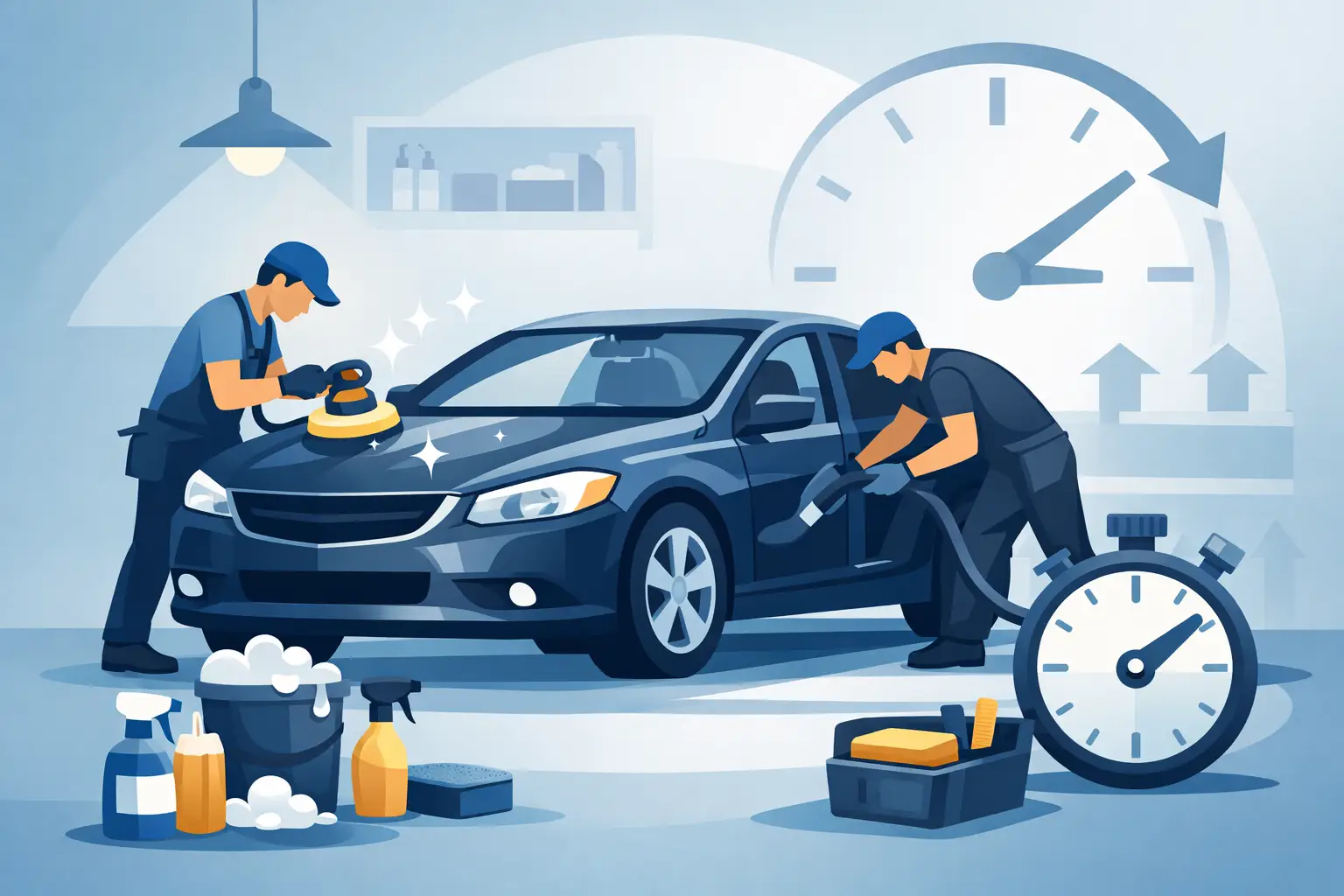
You book a detail, glance at the clock, and then the real question arrives – how long does a professional car detail take? The honest answer is that proper detailing is not measured like a standard car wash. It depends on the vehicle’s size, condition, the level of correction required, and the finish you expect when the keys are handed back.
A quick wash-and-vac might be over in under an hour elsewhere, but professional detailing is a different discipline. It is careful, methodical work designed to improve, preserve, and protect the car rather than simply make it look cleaner for a day or two. If you want durable results, better gloss, and a noticeably higher standard of finish, time matters.
How long does a professional car detail take in practice?
For most vehicles, a professional detail can take anywhere from 2 hours to a full day, and sometimes longer. An exterior-only enhancement on a regularly maintained car may sit at the shorter end. A full interior and exterior detail with machine polishing, paint decontamination, and protection can easily take 6 to 10 hours. If the vehicle needs multi-stage paint correction or has been heavily neglected, it may become a two-day or even three-day job.
That range sounds broad because not all details are the same. A family hatchback with light road film and a tidy cabin is a very different prospect from a black performance car covered in swirl marks, tar, iron fallout, and ingrained interior staining. The word detail covers both, but the labour involved is worlds apart.
What affects how long a professional car detail takes?
The biggest factor is condition. A well-kept vehicle that is washed safely and brought in regularly will always take less time than one that has gone through winter without proper protection or one that has seen years of automatic car washes. Dirt on the surface is only part of the job. Contamination embedded in paint, brake dust baked into wheels, pet hair in carpets, and marks in soft trim all add time.
Vehicle size matters too. A small city car generally takes less time than a long-wheelbase saloon, a 4×4, or a people carrier. More paint, more glass, more trim and larger interiors all mean more work. The same applies to complexity. Intricate alloys, gloss black trim, piano black interior panels, perforated leather and tight vents all demand extra care.
Then there is the service level itself. A maintenance detail is designed to restore a high standard on an already cared-for car. A reset detail is more intensive, aimed at bringing a tired vehicle back to a much better baseline. Correction work is another step again, where the goal is to reduce or remove paint defects rather than simply clean and protect.
Protection also affects timing. Applying a wax is quicker than preparing and installing a ceramic coating properly. Coatings need paintwork to be fully decontaminated, refined and panel-wiped before application. In some cases, curing time also needs to be factored into the booking.
Typical timings by service type
An exterior-only detail will often take around 2 to 4 hours. That usually includes safe washing, wheel cleaning, fallout removal where needed, drying, trim and tyre dressing, glass cleaning, and some form of protection. If the paint needs claying or machine polishing, the timing increases quickly.
An interior-only reset commonly takes 2 to 5 hours depending on soiling. A lightly used executive car with minor dust and a few marks is one thing. A family car with food debris, dog hair, stained seats and dirty mats is another. Interiors can be deceptively time-consuming because the work is slower and more intricate than many people expect.
A full interior and exterior detail often lands in the 5 to 8 hour range. This is where customers start to see the value of a professional service clearly. The car is not just cleaned. It is carefully refined, freshened and protected as a complete package.
Paint correction is where the clock stretches the most. A single-stage machine polish may add 2 to 4 hours, depending on size and hardness of paint. A multi-stage correction, especially on darker finishes where defects are highly visible, can push the total to 10 to 20 hours or more across multiple days. That level of work is for owners who want significant defect removal, stronger gloss and a much sharper finish under direct light.
Why quality detailing is not a quick process
Good detailing involves inspection and decision-making at every stage. A professional detailer is not just moving around the car with a mitt and vacuum. They are checking paint condition, selecting the correct chemicals, choosing safe tools for delicate areas, and adjusting technique depending on the material in front of them.
Take paintwork as an example. Before polishing even starts, the surface often needs a pre-wash, contact wash, chemical decontamination, and sometimes mechanical decontamination. Only then can polishing be approached properly. Rushing those stages risks dragging contamination across the paint or masking defects rather than correcting them.
Interior work is similar. Leather, alcantara, fabric, plastics, gloss trims and touchscreens all require different treatment. Strong products used carelessly may clean quickly, but they can also damage finishes, strip protective coatings or leave surfaces looking unnatural. Professional detailing takes longer because it prioritises the material, not just the stopwatch.
The difference between detailing and valeting time
This is where expectations often need resetting. A basic valet is usually built around speed and visible improvement. A professional detail is built around process, finish quality and longer-term preservation.
That does not mean every owner needs the most extensive package available. It does mean that if your goal is deeper cleaning, better presentation, reduced swirl marks, improved gloss, and proper surface protection, the job will naturally take longer than a budget clean. Time is part of the result.
For enthusiast and prestige vehicles, that difference becomes even more important. Soft paint, sensitive trim, larger wheels, performance brake dust and specialist finishes all benefit from a slower, more measured approach. On cherished cars, haste is rarely good value.
How to know what timing your car is likely to need
The best starting point is the car’s current condition, not just the service name. If the vehicle is washed regularly, stored well, and only needs a lift in gloss and cleanliness, a shorter appointment may be enough. If it has not had meaningful care in months, or years, expect more time to bring it back properly.
It helps to be realistic about what you want at the end. If your priority is a clean, fresh daily driver, you may not need correction work. If you want the paint looking significantly sharper under sunlight or inspection lighting, machine polishing will likely be required, and that adds hours. If you want long-term protection from a coating, preparation becomes even more important than the application itself.
This is why a proper consultation matters. Any reputable detailer should ask about the vehicle, inspect its condition where possible, and explain what is included in the service. A precise timescale without seeing the car can sometimes be guesswork, especially with older, neglected or specialist vehicles.
Is a longer detail always better?
Not automatically. A longer booking does not guarantee a better result, just as a shorter one does not always mean corners are being cut. What matters is whether the time matches the work being promised.
A well-maintained car may genuinely only need a few hours to look excellent again. Equally, a neglected vehicle cannot be transformed safely and properly in the same time frame. The right detail is the one that fits the condition of the car and the standard you want to achieve.
At Berry Shiny, that is why structured packages make sense. They set a realistic level of work while still allowing for the condition-based judgement that proper detailing requires. It gives owners a clearer idea of what they are booking and why one vehicle may need half a day while another needs substantially more.
Planning your day around a professional detail
If you are booking a professional detail, the safest assumption is to allow at least half a day unless you have been told otherwise. For more involved services, plan for a full day or potentially longer. If paint correction or ceramic protection is part of the package, ask whether the vehicle will need to stay overnight.
It is also worth arriving with personal items removed where possible. An empty boot, cleared door pockets and a cabin free from loose belongings can save time and help the detailer focus on the vehicle itself. Small practical steps like that can make the appointment smoother for everyone.
The real question is not only how long the job takes, but what that time delivers. When a detail is carried out properly, the finish looks sharper, the surfaces feel cleaner, the protection lasts longer, and the car is easier to maintain afterwards. For owners who care about condition and presentation, that time is usually well spent.
If you are unsure what your vehicle needs, the best move is simple: ask for an honest assessment, match the service to the car’s condition, and give the work the time it deserves.